
The eastern edge of Estonia
One territory, many identities
Border rivers and coastlines, oil-shale mines and pine forests, Stalin-era towns and youth workshops. Eastern Estonia is not one story — it is a set of stories held together by water, rail and industry.
A deliberately ambitious future image, not today's situation.
Region → Place
Where do you begin?
The region reframes itself according to where you step off. Choose a starting point — the story changes register.
Narva
Ida-Viru County
Border, fortress, river, factory
Open place →
Narva-Jõesuu
Ida-Viru County
Sand, pines, river mouth, sanatoria
Open place →
Sillamäe
Ida-Viru County
Sea, port, Stalinist plan
Open place →
Jõhvi
Ida-Viru County
Trains, buses, concert house
Open place →
Kohtla-Järve
Ida-Viru County
Oil shale, ash hills, chemistry
Open place →
Toila
Ida-Viru County
Limestone cliff, park, waterfalls
Open place →
Alutaguse
Ida-Viru County
Forest, bog, lakes, sand beach
Open place →
Tallinn
Harju County — outside Ida-Viru, arrival gateway
Airport, port, train east
Open place →
What connects the places
These are not labels. They are real lines across the landscape: a river, a coast, a railway, a mine, a culture house, a youth initiative.
Border & heritage
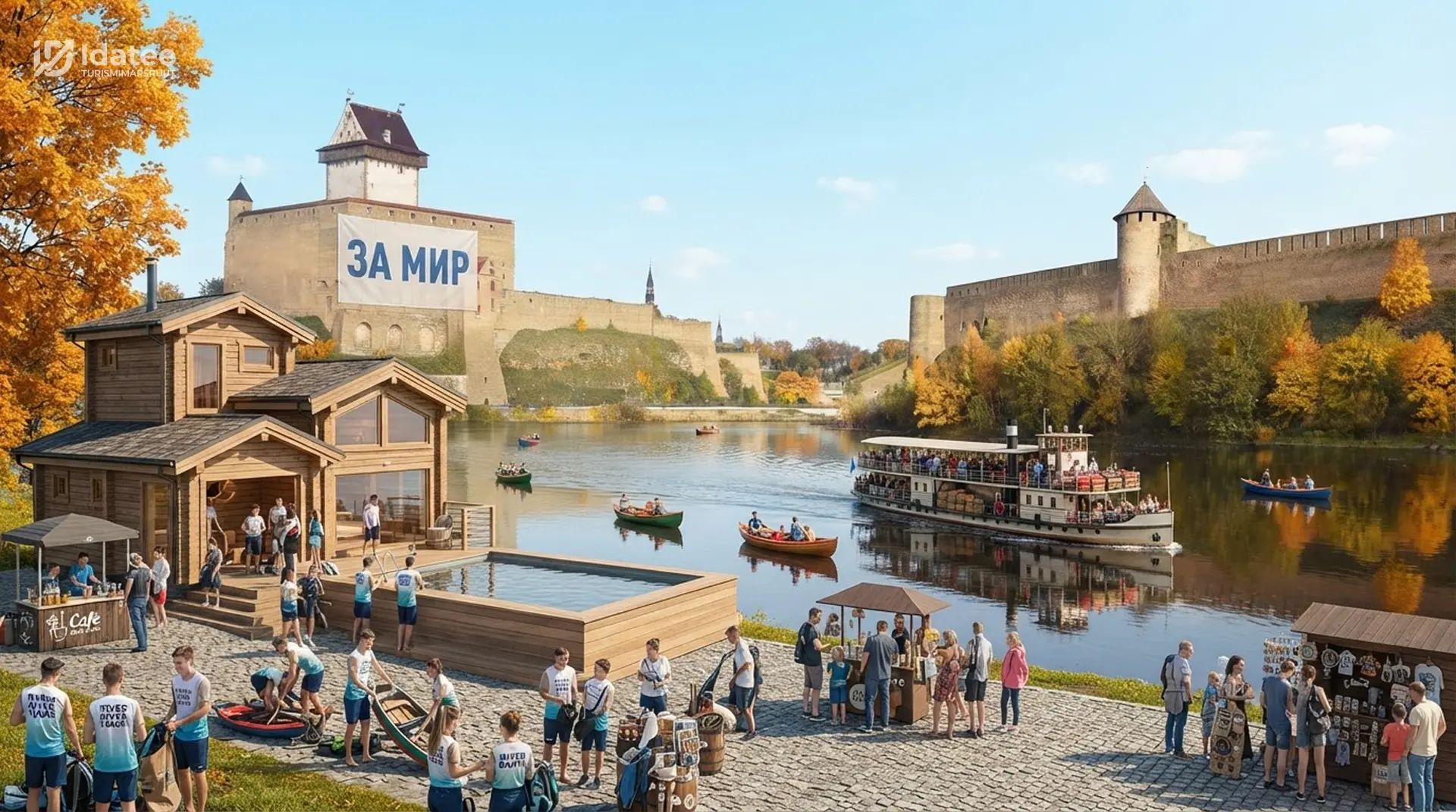
Two fortresses face each other across a river. The border is not a line but a living story.
Industry & reuse
Oil shale, textiles, power stations. The landscape that was broken is now material.
Water & coast
The Narva River, the Gulf of Finland, Lake Peipsi. Here water is transport, border and leisure at once.
Forests & bogs
Alutaguse is among Estonia's most thinly settled areas — a silence you can measure.
Culture & many languages
Russian- and Estonian-speaking life side by side, often in one building, one choir, one kitchen.
Youth & future
Youth centres, studios, clean-up days. The clearest sign that the region is not finished.
Architecture
A baroque town hall, a Stalinist town plan, a red-brick factory town.
Food
Lake Peipsi fish, Russian home cooking, cafés inside former industrial rooms.
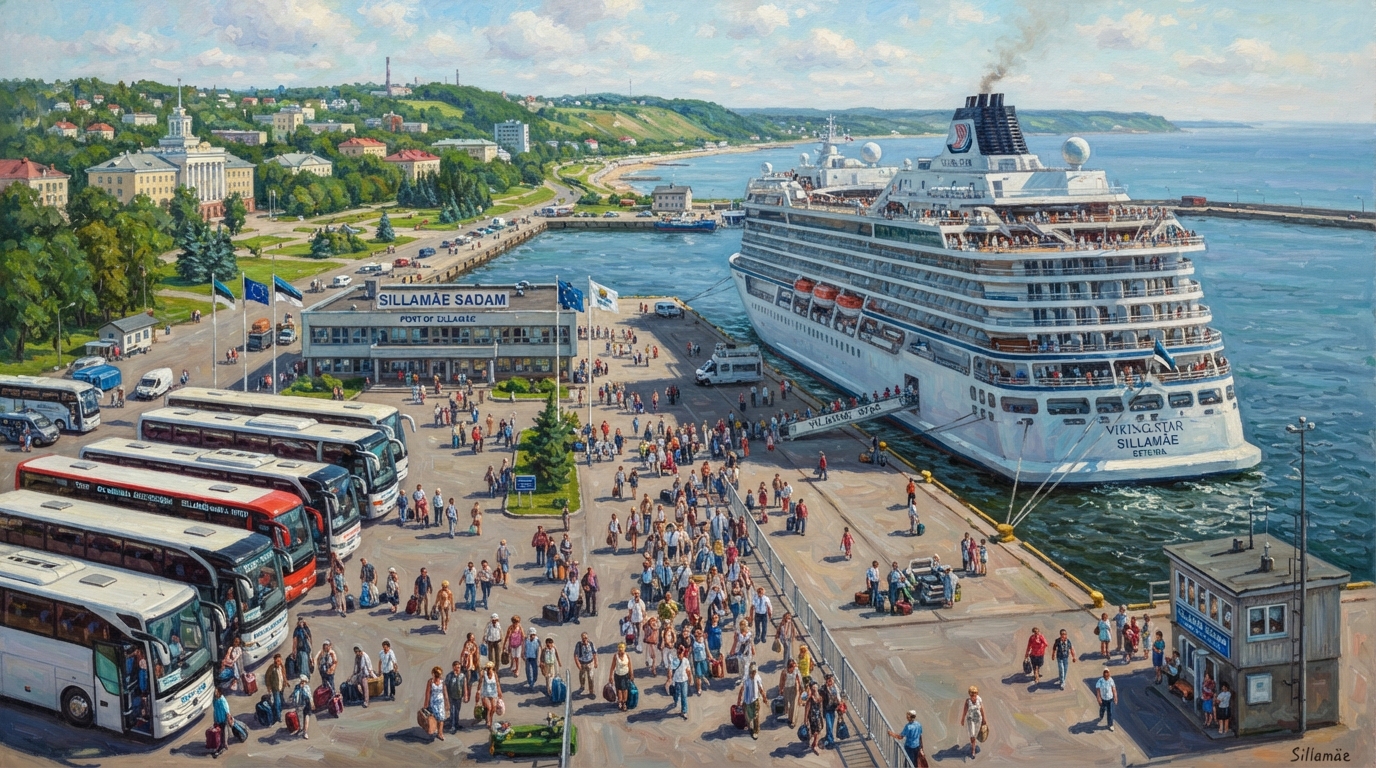
Today: a cargo port. A Swedish passenger route is a scenario, not a timetable.
The future archive · VISION
Sillamäe: closed city, open sea
Imagine a liner arriving from Stockholm: passengers step into a port that handles cargo today, then climb toward a city once absent from maps. Tourism does not erase uranium, industry or silence — it puts them into a new conversation with the sea, local stories and the future.
CLOSED / OPEN
INDUSTRY / HOSPITALITY
MEMORY / FUTURE
CARGO / ARRIVAL
“The sharpest souvenir here is not a magnet. It is a question: who gets to turn a closed city into a gateway — and who is that gate for?”Build a Sillamäe route →
The future archive
These images look like archival documents of something that already happened. They are in fact a possible future — marked VISION, never presented as today.
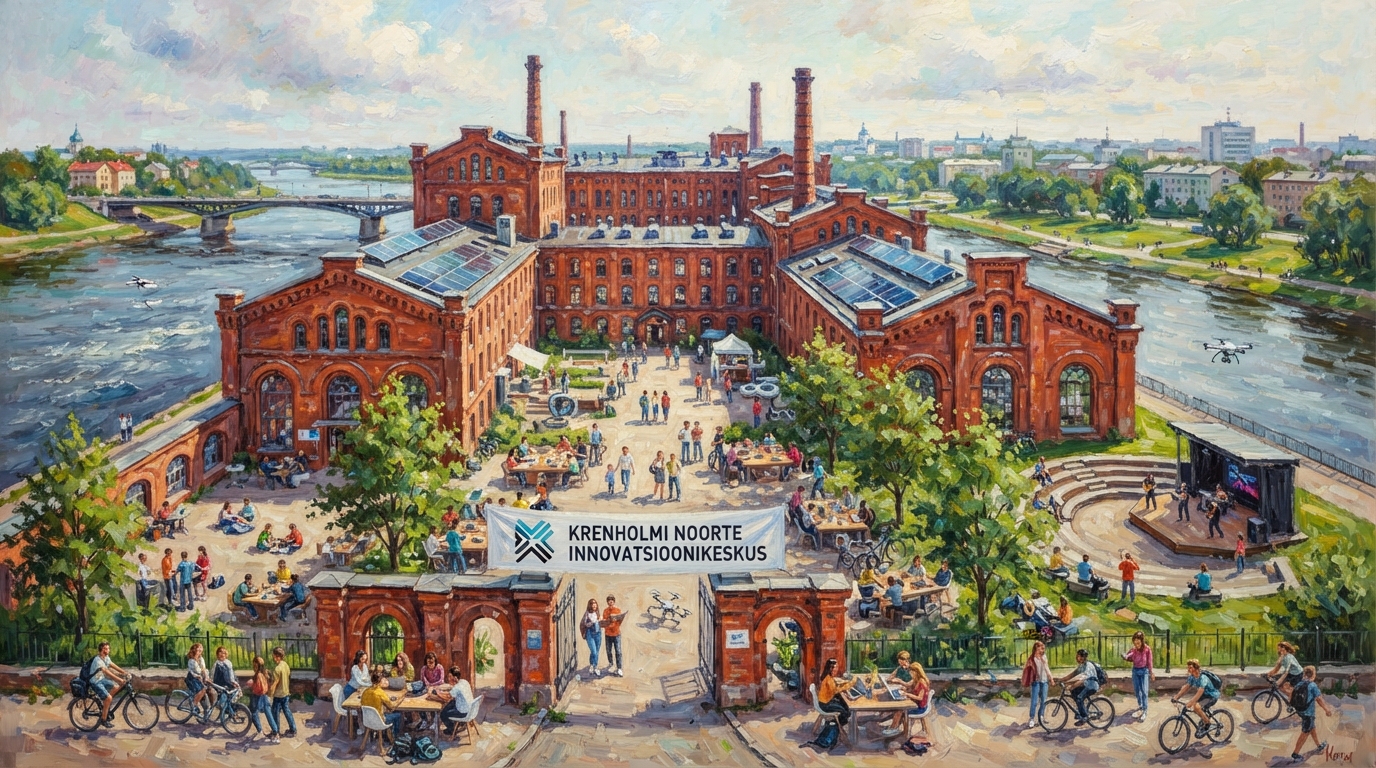
Kreenholmi noorte innovatsioonikeskus
An imagined scenario: workshops, studios and youth-run companies move into the Kreenholm brick halls, with cafés and an open-air stage in the yard.
Narva jõeäär 2050
An artist's image of the riverfront with saunas, boat traffic, canoe rental and a peaceful crowd — between two fortresses.
Sillamäe sadam kui reisivärav
A scenario in which Sillamäe port becomes the region's maritime gateway and visitors arrive directly on the coast.